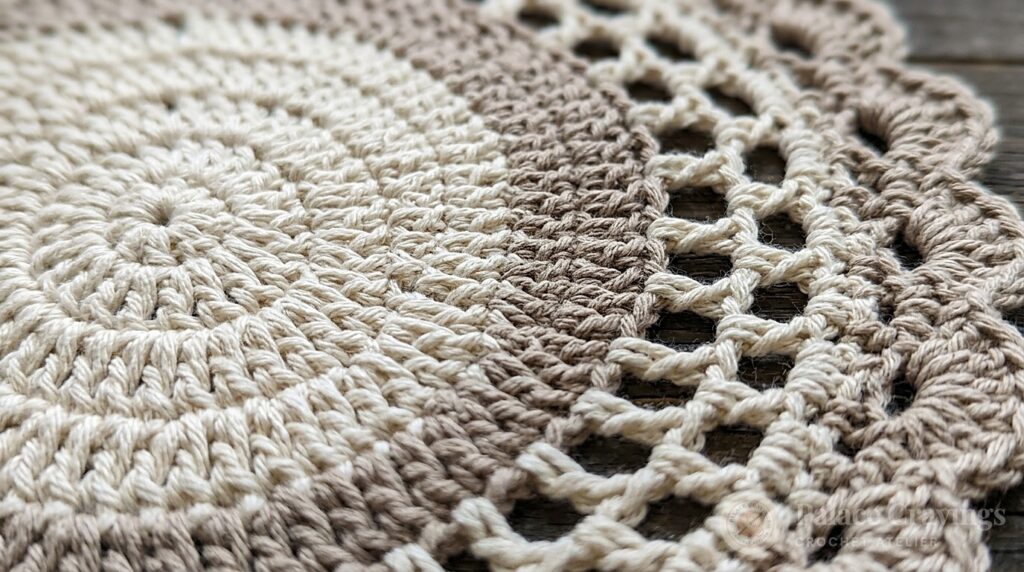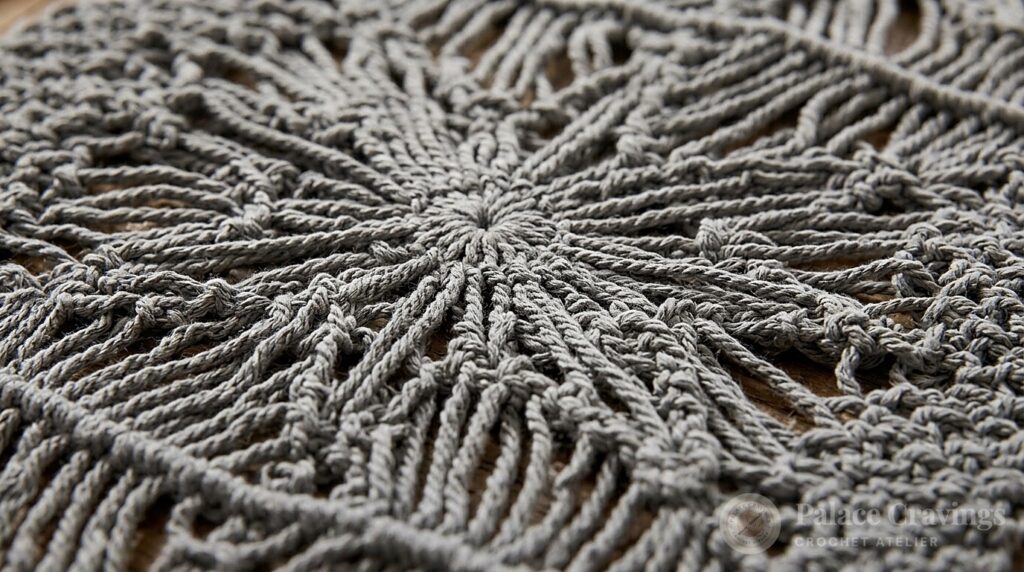
When designing kitchen textiles, safety and thermal barrier performance must guide every construction decision. This double-thick crochet potholder utilizes the thermal single crochet stitch, a specialized technique that works through both the active stitch and the unworked loop from the row below. The result is a dense, non-collapsing double-layer hot pad created without seaming two separate squares together, offering reliable protection against hot baking sheets and cast iron skillets.
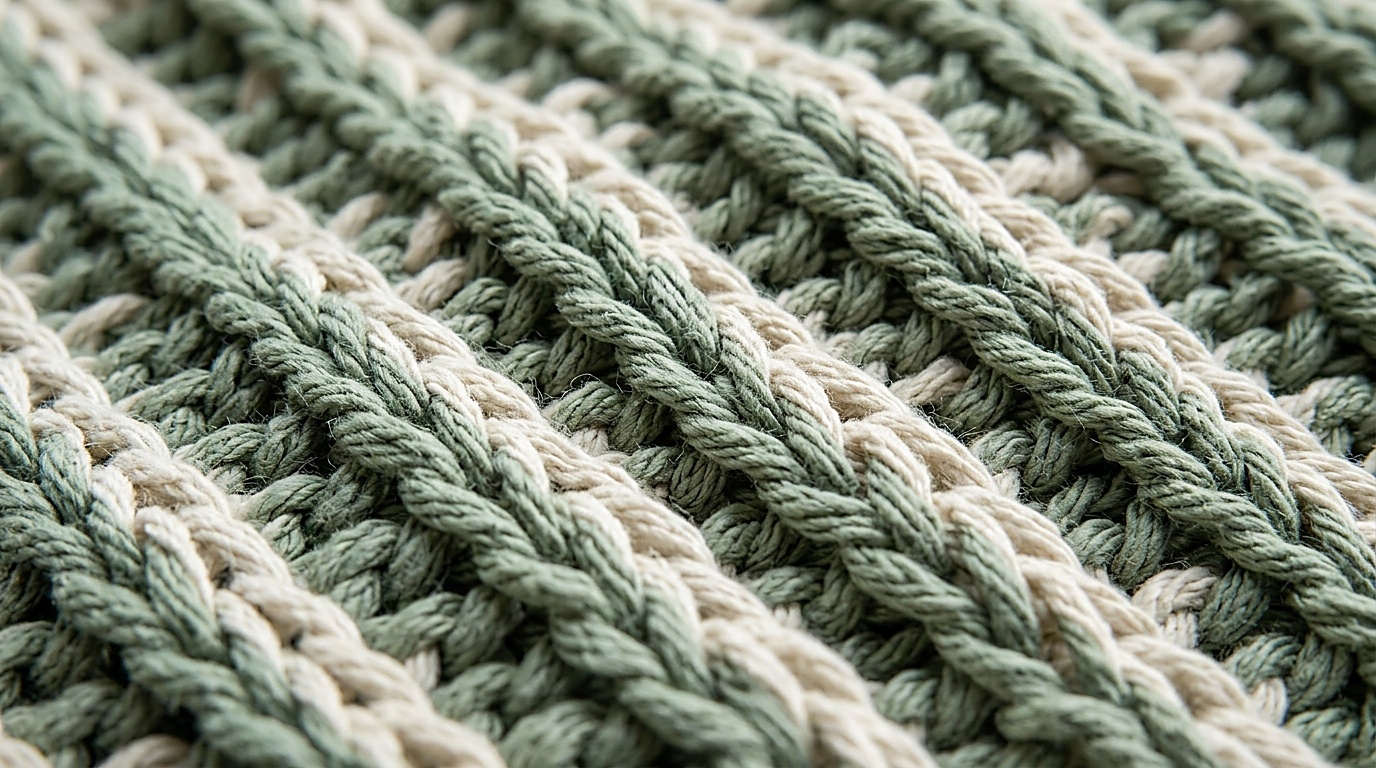
Many decorative crochet potholders use open lace or thin single crochet that allows heat to transfer directly to the maker’s hand. By employing a dense interlocking thermal structure in 100% natural cotton, this pattern provides genuine kitchen functionality while maintaining a clean, modern aesthetic.
The Kitchen Fiber Safety Law: Why Synthetics Melt
Before casting on, understand the non-negotiable rule of heat-safe kitchen textiles:
- 100% Natural Cotton Only: Pure cotton withstands direct contact with hot oven cookware up to approximately 400°F (204°C) without melting or singeing.
- Zero Acrylic or Polyester: Synthetic yarns are derived from petroleum plastics. Under oven temperatures, acrylic melts directly into skin, creating severe burn hazards. Never use acrylic yarn, blends, or polyester thread for items that handle hot cookware.
- Unmercerized Advantage: Unmercerized dishcloth cotton absorbs moisture rapidly and provides natural tactile grip against smooth cookware handles.
Reference Cotton & Thermal Hook Sizing

- REFERENCE_YARN: Category #4 Medium 100% Natural Cotton (e.g., Lily Sugar’n Cream or Bernat Handicrafter; approx. 120–140 yds / 110–128 m per hot pad).
- REFERENCE_HOOK: 4.5 mm (US Size 7) or 5.0 mm (US Size H/8). Thermal crochet creates a compact fabric, so maintaining relaxed tension prevents excessive stiffness.
- TARGET_DIMENSIONS: Approx. 7.5 in × 7.5 in (19 cm × 19 cm) square.
- TARGET_GAUGE: [Target Pattern Standard — GAUGE: NEEDS PHYSICAL VERIFICATION for maker tension]
15 thermal sc × 16 rows = 10 × 10 cm (4 × 4 inches).
Anatomy of Thermal Single Crochet (t-sc)
Thermal stitch differs from standard crochet by simultaneously capturing loops from two adjacent rows:
- Hook Entry Point: Insert your hook into the back loop of the current stitch AND down through the unworked open loop from the row immediately below it.
- Yarn Over & Pull Up: Yarn over and pull up a loop through both layers (2 loops on hook).
- Finish Stitch: Yarn over and pull through both loops on the hook, completing the thermal single crochet.
Row-by-Row Thermal Hot Pad Pattern
Foundation Row: Chain 28 loosely with the 4.5 mm hook.
Row 1 (Base Single Crochet): Single crochet into the back ridge loop of the 2nd chain from the hook and each chain across. Turn. (27 active stitches)
Row 2 (Thermal Setup): Ch 1 (does not count as a stitch). Insert hook into the back loop of the first stitch AND the parallel foundation chain loop below. Yarn over, pull up a loop, yarn over, pull through both loops. Repeat thermal sc in each stitch across to the end. Turn. (27 thermal stitches)

Rows 3 through 48: Ch 1. Work 1 thermal sc across all 27 stitches, consistently catching the back loop and the unworked loop of the row below. Work until the piece measures a square (approx. 7.5 inches / 19 cm), ending on a Row 48 repeat.
Closing Row: Ch 1. To seal the open front loop of the final row, insert hook through BOTH top loops of the current stitch AND the loop from the row below. Work 1 regular sc in each stitch across. This creates a balanced, finished top border matching the bottom edge.
Corner Hanging Loop & Perimeter Border
A reinforced loop allows convenient hanging beside the stovetop:
- Loop Construction: Do not fasten off at the end of the closing row. Chain 14 loosely from the top-right corner. Slip stitch into the base of the corner stitch to anchor the ring.
- Reinforcement Pass: Turn slightly and work 16 tight single crochets directly into the chain loop ring, completely encasing the chain cord in durable cotton padding. Slip stitch to the corner base to seal.
- Finishing: Fasten off, leaving a 6-inch yarn tail. Weave in ends through the thick internal fabric core using a blunt tapestry needle.
Kitchen Care & Thermal Longevity

To preserve heat resistance and hygiene across years of everyday cooking:
- Washing: Machine wash with kitchen towels in warm water. Heavy cotton hot pads hold grease if washed in cold water.
- Moisture Warning: Never use a damp or wet potholder to lift hot cookware. Water in the fibers conducts heat rapidly through steam, causing steam burns. Always ensure the cotton is bone dry before handling hot pans.
Save This Pattern to Pinterest
Looking for a safe, modern kitchen craft? Save these official pattern cards to your Pinterest crochet boards for quick gift making.